
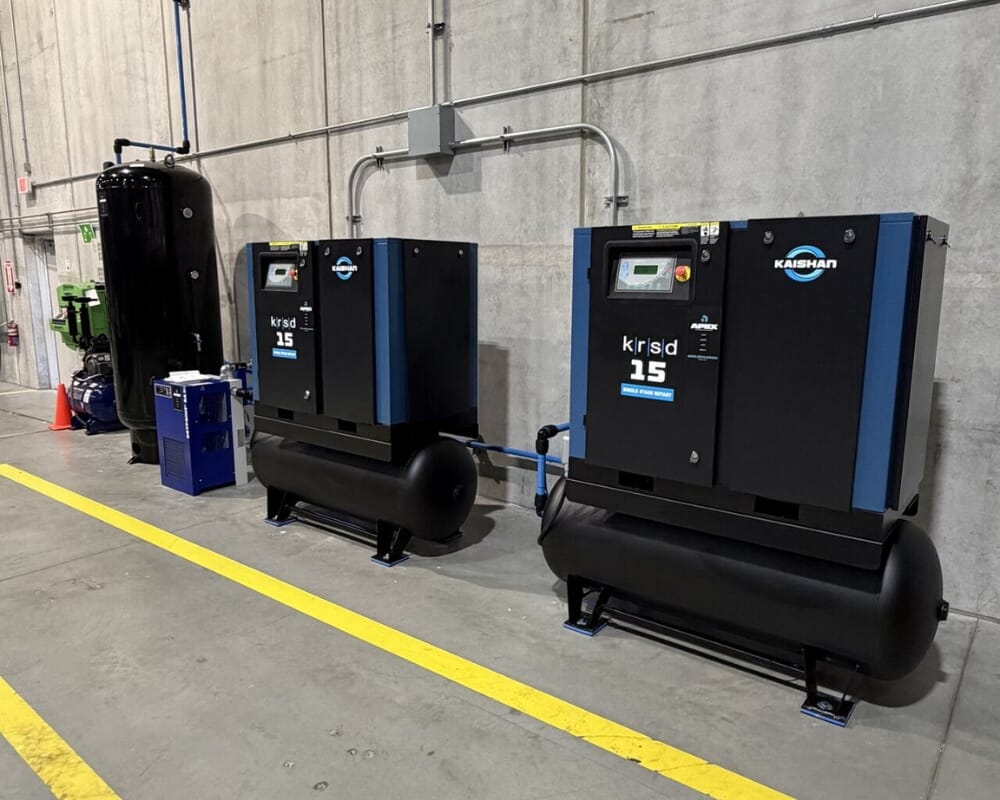
Air compressors are a major expenditure for most companies, so their lifespan has a significant impact on how attractive that capital investment in greater compressor power actually is.
The math is straightforward: the longer a compressor runs, the more years you have to recoup its purchase price and the more attractive the original capital investment looks to your financial team. A 20-year compressor that runs for 20 years costs half as much per year of service as the same machine that runs for 10.
Simply put, longevity compounds.
Air compressor lifespan also intersects with energy efficiency in a way that’s easy to miss. Year after year, manufacturers keep making their new compressors more efficient. Rotor profile efficiencies and electrical components (motors and drives), so efficiencies relative to existing compressors continue to improve. What was “efficient” 10 years ago may no longer be considered efficient today.
There’s a point in any compressor’s life where the energy savings of a new unit pay for the replacement in just a few years, even if it’s still fully functional. We’ll come back to that topic later.
So, which type of compressor wins on lifespan? Once again, the honest answer is “it depends.”
Compressed Air Lifespan: Which Type of Compressor Wins?
| Type | Reciprocating | Rotary Screw | Centrifugal |
|---|---|---|---|
| Universal Issues |
Maintenance Issues Across All Types Sizing and short cycling Over-pressurization Quality of the environment |
||
| Specific Issues |
|
|
|
Let’s start by looking at the issues that affect lifespan across all compressor types.
Lifespan Concerns Every Compressor Shares
Whichever compressor technology you’re running, a handful of operating factors shorten its life in the same ways. Get these concerns right, and any compressor on the market will reward you with a long service life. Get them wrong, and even the best-built unit will fail early.
Sizing and Short Cycling
When a compressor is oversized for its application, it cycles on and off constantly. Each startup puts stress on the motor windings, contactors and bearings, and if it’s constantly cycling, your unit never reaches a stable operating temperature. Moisture accumulates as a result of lower operating temperatures, thus accelerating wear.
Undersizing, on the other hand, can cause your compressor to operate at a higher duty cycle than designed. If the unit is undersized, it cannot reach the pressure setpoint and the user, as a result, will often attempt to increase the system pressure even more. Flow typically drops even further and amplifies artificial demand. This continuous operation at full load can stress electrical components and motors.
Over-Pressurization
Running a compressor above its design pressure forces more work into each compression cycle, generates more heat and shortens the life of bearings, valves and seals. It also wastes energy and increases leakage. Pressure settings should be no higher than what the application actually requires.
Quality of the Environment
A compressor drawing in hot, dusty or dirty air is going to live a shorter life than the same machine in a clean, climate-controlled mechanical room. Intake air quality, ambient temperature and access for cooling determine how long any compressor—of any type—will last.
Change
Significant changes, such as expanding or downsizing your production lines, adding new equipment or adding new capabilities, could dramatically impact your compressed air system. Increase the amount of compressed air you need, and your compressor may not be able to supply enough flow. Reduce the demand, and it could begin short cycling. Both will adversely impact air compressor lifespan.
For more on the impact of change, see our blog post, “Adapting Compressed Air Systems to Production Changes.”
Maintenance
Maintenance directly impacts lifespan: without a significant commitment to upkeep, any compressor’s lifespan will be short. That means oil analysis, filter changes at the intervals your manufacturer specifies, separator inspections and the unglamorous daily walk-around that catches small problems before they shorten airend life.
The Repair vs. Replace Decision
As compressors age, they become less efficient. Manufacturers, meanwhile, keep making their new machines more efficient. The gap has gotten large enough that replacing a still-working compressor with a newer, more efficient unit can have a surprisingly short payback period—sometimes just a year or two.
That’s a real option more plants are starting to consider, and it’s worth at least running the numbers when major service intervals come up. For more on the repair vs. replace decision, see our blog post, “Signs Your Air Compressor Needs Repair or Replacement.”
An issue related to both maintenance and the repair-vs.-replace decision is parts availability. For older compressors, parts may no longer be available. They may even need to be made from scratch, increasing both lead time and cost.
With those universal concerns on the table, let’s get into where the major compressor types diverge on lifespan.
Lifespan Differences Between the Main Compressor Types
Three compressor types cover the bulk of industrial applications: reciprocating, rotary screw and centrifugal. They share the universal concerns above, but their designs create different lifespan profiles.
Reciprocating Compressors
Reciprocating compressors are positive-displacement machines. A piston moves up and down in a cylinder, compressing air in much the same way a car engine works. They’re inexpensive, can reach very high pressures and are well-suited to intermittent-duty shops.
But commercial reciprocating compressors have a short duty cycle, usually 50% or less, and both the motor and the compressor itself need a cool-down period. Most have cut-off switches that open a contact when the unit gets too hot, but you can reset them manually. Do that too often and you’ll shorten the life of your compressor.
There are, however, industrial recips that are capable of a 100% duty cycle.
The piston rings, check valves and bearings are all wear items that respond well to regular service. Neglect them, and your operation will pay the price.
With disciplined maintenance and intermittent duty, a reciprocating unit can easily run 15 to 20 years. Without it, the airend will fail much sooner.
Rotary Screw Compressors
Rotary screw compressors are also positive-displacement machines, but they use two helical rotors turning against each other instead of a piston. They handle 24/7 duty, which is why they’ve become the workhorses of industry. They are based on a simple, time-tested design and have fewer moving parts than recips, one of the main reasons rotary screws have such long lifespans when maintained appropriately. See more in our post, “Four Key Steps To Extend The Lifespan Of Your Rotary Screw Compressor With Proper Lubrication.”
The simpler design is important. It means the compression chamber generates very little internal friction, and the main wear items—bearings, seals, couplings, lubricant and the separator—are all replaceable service items rather than catastrophic failure points. Most rotary screw airends last 10 to 15 years or more before needing a major rebuild, and many go considerably longer.
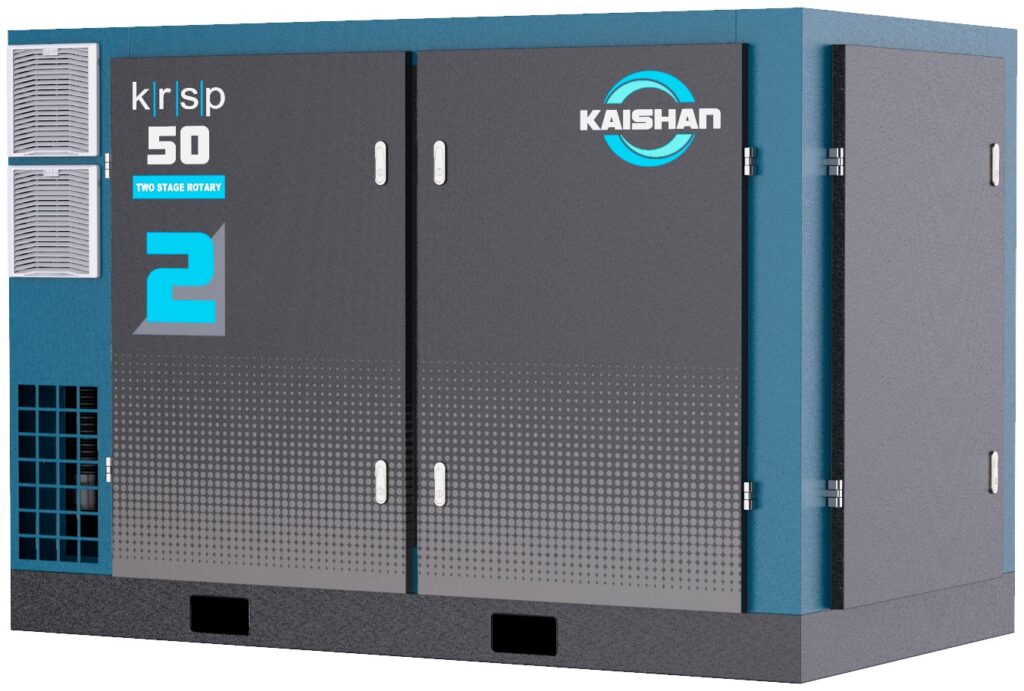
Within the rotary screw family, two-stage units have even greater longevity because they have intercoolers between the stages. Splitting compression work across two rotors at lower per-stage compression ratios reduces bearing thrust load, lowers operating temperature and further extends airend life. For continuous-duty base-load applications, the two-stage design is the longest-lived option in the rotary screw family.
Oil-Free Rotary Screw Compressors
Oil-free rotary screws are a special case worth understanding clearly.
To take the place of the lubricant in a standard oil-injected unit, an oil-free rotary screw maintains the air seal by operating at a much higher speed—roughly 22,000 RPM versus 1,800 RPM for a normal rotary screw. They also maintain much tighter tolerances and run at higher temperatures. To protect the rotors, oil-free machines have a protective coating that may wear away over time. In addition, most manufacturers recommend replacing the second stage after about five years.
All of those factors—the speed, the tighter clearances, the higher heat, the coating that can wear off—impact air compressor longevity and efficiency.
As a practical rule, oil-free units should not be selected if longevity is the primary requirement. They’re mainly chosen because the application demands a level of air purity that oil-injected units can’t deliver. If you don’t need that level of air quality, an oil-injected unit will provide a longer service life at a lower total cost of ownership.
Centrifugal Compressors
Centrifugal compressors take a fundamentally different approach. Instead of squeezing air into a smaller space, an impeller spins the air up to high speed and a diffuser plate slows it down, converting velocity into pressure.
Centrifugals are dynamic compressors. Because no rotors mesh and no pistons ride in cylinders during compression, they have far fewer parts that touch each other to do the work. They are meant to last a long time—think decades—with maintenance.
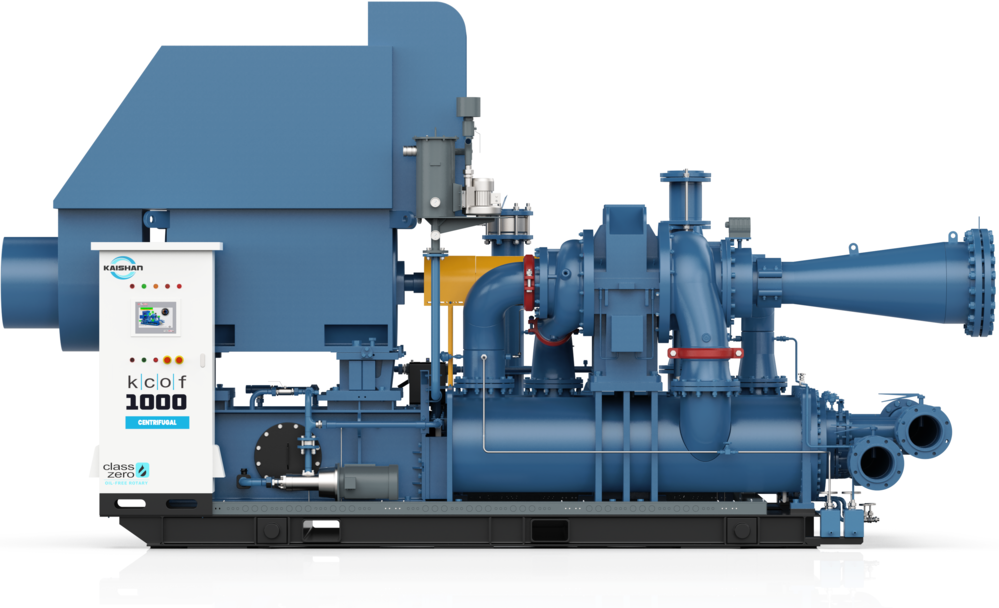
The result is excellent air compressor longevity and low maintenance. Centrifugals are the right pick for large, continuous-duty applications—chemical, petrochemical and automotive plants generally needing 400 HP or more—anywhere you need a lot of clean air delivered steadily for long stretches.
So, while their lifespan is among the longest of any compressor technology when properly maintained, they are most cost-effective in larger applications.
Now that we’ve walked through the main types, let’s bring the lifespan question back to a practical level.
| Compressor Type | Typical Lifespan with Proper Maintenance |
Best-Fit Application |
|---|---|---|
| Industrial reciprocating | 15–20 years | Higher pressure applications |
| Oil-free rotary screw | 10–15+ years (with rigorous PM) | High-purity air only |
| Rotary screw (single-stage) | 10–15+ years | General manufacturing, 24/7 duty |
| Rotary screw (two-stage) | 15–20+ years | Continuous base load, heavy industrial |
| Centrifugal | 20+ years | Large-volume continuous duty |
The Two Things That Actually Decide Lifespan
If you step back from the technology comparison, two practical considerations matter more than anything else for compressor lifespan.
The Right Compressor in the Right Place
Having the right type of compressor in the right application, at the right size, in the right environment. That’s the single highest-leverage decision you’ll make. Match those up and any of the technologies above will reward you with a long service life. Get them wrong, and even the best-built unit will fail early.
A Compressed Air Consultant You Can Trust
Finding a compressed air consultant you can trust. Someone who can evaluate your facility and your needs to help you select the right equipment and maintenance schedule for your operation. That advisor is worth more than any spec sheet.
Time after time, our customers tell us their local compressed air professional is their lifeline, not only for air compressor lifespan but also for compressor reliability, efficiency and cost-effective operation. See dozens of their real-world accounts on our case study page.
Key Takeaways
- Air compressor lifespan is closely tied to capital investment attractiveness—the longer a unit runs, the more years you spread its purchase price across.
- Universal lifespan concerns apply across every compressor type: sizing and short cycling, over-pressurization, environmental conditions and consistent maintenance.
- As compressors age, they get less efficient. Newer compressors are more efficient than ever, and replacing a working unit can sometimes pay back faster than you’d expect.
- Reciprocating compressors can last 15–20 years in intermittent duty but need cool-down periods and disciplined valve, ring and bearing service.
- Rotary screws are based on a simple, time-tested design that makes them the 24/7 workhorses of industry. Replaceable wear items support long lifespans; two-stage designs go even further.
- Oil-free rotary screws run faster with tighter clearances and protective rotor coatings that can wear through—choose them only when air purity demands it.
- Centrifugal compressors have the longest service life of the major types, but are most cost-effective for larger applications (above 400 HP).
- The right compressor in the right application—guided by a trusted consultant—matters more than the technology on the compressor type.
The Path to Air Compressor Longevity Begins with a Long-term Partnership
A long-lived compressor doesn’t happen by accident. It’s the result of the right technology, the right application and a maintenance program that’s actually followed.
If you want to maximize air compressor lifespan, the best advice we can give you is to build a long-term relationship with a local compressed air professional.
Kaishan USA works with a nationwide network of independent distributors, who can provide on-site help and consultation.
We partner with independent, local distributors because it’s the best way to make sure you get expert guidance, faster response times and personalized support tailored to your needs. They consistently deliver the right system, reliable service and quick access to parts when you need them most.
Reach out today and find not just a solid service provider, but a compressed air partner. Find a compressed air professional near you or contact us directly.
Further Reading
“Compressed Air Reliability: Which Type of Compressor Wins?” Comparing the reliability of the different types of air compressors.
“Signs Your Air Compressor Needs Repair or Replacement.” More on the repair vs. replace decision
“What Stats Should You Be Monitoring To Ensure Air Compressor Longevity?” Key metrics you should be monitoring to lengthen air compressor lifespan.
Frequently Asked Questions
The lifespan of an air compressor depends primarily on the type of equipment, the operating environment and how well it's maintained. Here's what you can typically expect:
- Rotary screw compressors (the most common industrial type) last 10 to 15 years or longer, with 80,000 to 100,000 operating hours being standard before major overhauls are needed.
- Reciprocating compressors can reach 15 to 20 years with consistent maintenance, though they require more frequent upkeep.
- Oil-less reciprocating compressors have the shortest lifespan, maxing out at five years.
The key variable is maintenance. A well-maintained compressor will consistently exceed these timelines, while neglected equipment may fail prematurely.
Oil-free compressors don't have this advantage. Without oil lubrication, internal components experience greater friction and heat generation. Designs like oil-less compressors compensate with specialized materials and engineering, but the increased friction inherently leads to faster wear and shorter lifespan.
The trade-off: If your application requires oil-free air (such as in pharmaceutical, food or electronics manufacturing), you're accepting a shorter equipment life in exchange for air purity. However, not all oil-free options are equal—water-injected screw compressors, for example, offer better durability than oil-less designs while still delivering oil-free air.
Preventive maintenance is hands-down the most significant factor. The difference between a compressor that fails at year five and one running strong at year 15 is typically consistent, proactive maintenance.
Essential maintenance practices include:
- Changing air filters and oil on schedule
- Regular drainage to remove moisture buildup
- Monitoring and servicing valves, belts and seals
- Keeping the compressor clean and ensuring adequate ventilation
- Checking for unusual vibrations, sounds or temperature changes
Facilities that implement solid preventative maintenance schedules routinely see their compressors exceed typical lifespan expectations. Conversely, reactive maintenance (fixing things only when they break) accelerates wear and leads to premature failure.
An oversized compressor short-cycles, operates inefficiently, wastes energy, accumulates moisture in the lubricant and may not receive adequate cooling. An undersized compressor struggles to meet demand, working harder and longer than it was designed to, which accelerates component wear.
When a compressor is correctly sized for your actual air demand, it operates in its optimal range—delivering the pressure and volume you need without unnecessary strain. This balanced operation extends equipment life, improves energy efficiency and reduces maintenance costs.
If you're unsure whether your compressor is properly sized, consult with a compressed air systems specialist.
While a used compressor is less expensive upfront, new equipment typically offers superior long-term value when you factor in total cost of ownership.
Here's why:
- Energy efficiency: Newer compressors are significantly more efficient than older models, resulting in lower monthly energy bills. Over 10 years, these savings can easily exceed the higher initial purchase price.
- Reliability: New equipment has no pre-existing damage or hidden wear. You're starting with a clean slate.
- Warranty protection: New compressors come with manufacturer warranties, protecting you against premature failures.
- Hidden costs: Used equipment may harbor issues that don't surface immediately but can lead to expensive repairs within a few years.
The math typically works in favor of new equipment, especially for critical applications where downtime is costly.
There's no single magic threshold, but here are the key indicators it's time to consider replacement:
- Age and lifespan: The compressor is approaching or has exceeded the typical lifespan for its type (10-15 years for rotary screws).
- Rising repair costs: Maintenance expenses are climbing steadily, and major overhauls are on the horizon.
- Energy inefficiency: The compressor is consuming noticeably more energy than before, suggesting internal wear.
- Increasing downtime: The unit is failing more frequently, disrupting operations.
- Obsolete technology: The compressor doesn't meet current efficiency standards or lacks modern features your operation needs.
The smart approach is to plan replacement proactively—before catastrophic failure forces your hand. Doing so allows you to spread capital costs, minimize downtime and maintain operational continuity.
Operating conditions have a substantial impact on equipment longevity. A compressor running in ideal conditions will consistently outlast one operating in harsh environments.
Factors that shorten lifespan:
- High ambient temperatures: Excessive heat accelerates component wear and reduces cooling efficiency.
- High humidity: Moisture buildup leads to corrosion and internal component degradation.
- Dust and contaminants: Airborne particles clog filters, force the compressor to work harder and contaminate internal components.
- Temperature fluctuations: Rapid temperature swings stress seals and internal components.
Factors that extend lifespan:
- Climate-controlled indoor spaces: Stable temperatures protect components.
- Clean intake air: Filtered intake prevents contamination.
- Adequate ventilation: Proper air circulation keeps the compressor cool.
- Protection from elements: Covered or sheltered installation extends life.
If your compressor operates in a harsh environment, plan for more frequent maintenance and be prepared to accept a shorter equipment life. Conversely, invest in environmental controls when possible—the cost often pays for itself through extended equipment life and reduced maintenance.
Listen to the Podcast Version



The Compounding Math and Universal Lifespan Killers
Welcome back to The Big Dog Podcast! I am Jason Reed.And I am Lisa Saunders! Great to have you with us today. Now Jason, let us dive right in. If you double the life of a piece of equipment, like running a rotary screw for twenty years instead of ten, you literally cut its original capital purchase cost per year of service right in half. The math just compounds.
Right, fifty percent per year! But Lisa, most plant managers I talk to think keeping a compressor alive for twenty years is just about buying the right brand. Is it really that simple? Not even close. Look, you can buy the most heavy duty industrial machine on the market, but if you size it wrong, you are basically taking a hammer to it every single day. Take an oversized compressor, for instance. It gets installed, air demand is low, so it short cycles. It starts, it stops, it starts, it stops. Every single startup dumps massive electrical and mechanical stress onto the motor windings, contactors, and bearings.
And because it never stays running long enough to heat up, right? It never reaches that stable operating temperature?
Spot on. Lower operating temperatures mean moisture accumulates in the oil. Water in the lubricant is absolute poison for bearings and airends. It just accelerates wear instantly.
And then on the flip side, if you go too small, if you undersize the unit, you get a completely different disaster. I have seen operators get frustrated because the machine cannot reach pressure setpoint, so what do they do? They crank up the pressure setting on the controls!
Oh, over pressurization, yeah. That is a classic shop floor nightmare. You boost system pressure above design specs, you generate extreme internal heat, you strain the seals, valves, and motor, and you actually amplify artificial demand. Every extra pound of pressure feeds leaks and wastes energy while cooking the lubricant.
Not to mention if you put that machine in a dirty, unventilated mechanical room drawing in hot, ambient, dusty air, you are basically feeding it sandpaper.
Yeah, dust and ambient heat destroy coolants and clog filters faster than anything else. But here is the real kicker, Lisa, something a lot of finance guys miss. There is an efficiency trap with old machines.
The efficiency trap? What do you mean?
Well, even if a ten year old compressor is still running fine, compressor technology moves fast. Rotor profile designs and motor efficiencies improve constantly. The energy gap between a ten year old machine and a brand new unit is often so large that the energy savings from a new installation will literally pay for the entire replacement in just twelve to twenty four months.
Twelve to twenty four months! So keeping that functional old iron around out of pride might actually be burning a massive hole in your utility bill every month.
Precisely. Longevity is great, but running a power hog just because it still turns over is bad business.
Recip vs Screw vs Centrifugal Declaring a Lifespan Champion
Okay, so let us talk actual compressor designs. When plant managers ask which type actually wins the ultimate lifespan crown, where do we start? Small piston recips?Reciprocating compressors, yeah. Commercial piston recips are great for auto repair shops or intermittent use, but people forget commercial recips often have a fifty percent duty cycle limit. That means thirty minutes running, thirty minutes cooling down. If you run them continuously, they overheat, hit their thermal cut off switch, and if an operator keeps manually resetting that cut off switch to keep working?
You burn up the motor!
You burn the motor, fry the check valves, and destroy the piston rings. Now, true industrial recips built for continuous duty can deliver fifteen to twenty years, but only if you are disciplined about replacing rings, bearings, and valves on schedule.
What about rotary screw compressors? They are the workhorses in most manufacturing plants, right?
Rotary screws dominate because they are engineered for one hundred percent duty cycle, twenty four seven operation. Two helical rotors meshing together, very few moving parts touching, no pistons banging up and down. All the main wear items, seals, bearings, couplings, separators, are modular service items. A well maintained single stage rotary screw will easily run ten to fifteen years before an airend rebuild.
And two stage rotary screws last even longer, do they not? Because they split the compression workload across two rotor sets with an intercooler between them.
Exactly. Lower compression ratio per stage means lower operating heat and dramatically reduced thrust load on the bearings. A two stage rotary screw, like Kaishan's KRSP2, is pretty much the marathon runner for continuous industrial base load, often exceeding fifteen to twenty years easily.
Wait, what about oil free rotary screws? People assume oil free means less maintenance, but that is not quite how the physics works, is it?
No, nononono. Oil free screws run at crazy speeds, like twenty two thousand RPM compared to eighteen hundred RPM for standard oil injected units. They run tighter clearances, higher heat, and rely on special rotor coatings. Most manufacturers recommend replacing the second stage airend around five years in. If sheer longevity is your primary goal, oil free is not the winner unless your process strictly demands pure air, like pharmaceuticals or electronics.
Ah, so if pure, raw longevity is the only metric, centrifugal compressors take the crown, right?
Centrifugals are the heavyweights. Above four hundred horsepower, dynamic compression with high speed impellers where nothing touches. No rotors meshing, no pistons rubbing. Well maintained centrifugal units in big plants run for decades, twenty plus years, easily.
Decades! But if you let any of these older machines run without a solid plan, you hit that brick wall of parts availability, do you not? Custom machining old obsolete parts gets insanely expensive.
Oh, lead times can stretch into months, and custom parts will wipe out whatever money you thought you were saving. That is why working with a trusted local compressed air partner who actually knows your system setup matters more than any spec sheet on the market.
100%. Right application, proper sizing, and good maintenance beat everything else every single time. Well, that wraps up our breakdown for today! Thanks for tuning in, everyone.
Catch you next time on the Big Dog Podcast.