

Get two compressor salespeople together, and they’ll argue about whose machine is more cost efficient. Cost efficiency is, after all, a major contributor to overall compressed air system efficiency. And thus it’s a major concern for all facility managers.
But the question isn’t as simple as, “Which compressor wins?”
It really needs to be about which compressor wins for you. For your facility, your load profile and the next 10 years of electricity bills.
Three things we can say for certain about the cost efficiency of the different types of compressors:
- The total cost of ownership matters more than sticker price.
- The application matters more than the brand.
- Commission an audit by your local compressed air professional, if you’re not sure.
Everything below builds on those three big ideas.
Let’s start with the technologies.
The Three Industrial Workhorses
Most industrial plants run one of three compressor types: reciprocating (piston), oil-flooded and oil-free rotary screw or centrifugal. Each one wins in a specific situation, and each one loses in a specific situation. Knowing which is which gives you a huge advantage.
We’ll start with recips.
Reciprocating Compressors: Cheap to Buy, Cheap to Maintain. Until They Aren’t.
Lower-horsepower, commercial-grade reciprocating compressors (also called piston compressors) have the lowest purchase price of any compressor technology out there. That’s their superpower and, depending on how you use them, their downfall. Buy them solely on price, and you may live to regret it.
Pistons are built for intermittent duty. Think body shops, small auto repair garages, hobby shops and weekend warriors. You turn it on for a while, you turn it off. The compressor is happy. Energy costs are low because it isn’t running much. Maintenance is light because nothing is wearing out.
The trouble starts when a shop that began as a one-bay operation grows into a three-bay operation that’s running air tools eight hours a day, five days a week.
All of a sudden, that bargain-basement piston compressor is overwhelmed, doing a job it was never designed for. Rings wear out. Valves wear out. Lubricant has to be replaced more often.
And here’s the part most facility managers may miss at first: as those internal components wear down, the compressor has to work even harder to maintain the same pressure. Your energy bill goes up to get the same performance you used to get for less. Repair bills and breakdowns happen with increasing frequency.
We see this story play out over and over. A shop buys a piston because the price was right, runs it intermittently for a year or two, then the business grows, and the compressor is suddenly running constantly. By year three or four, they’re dumping money into valve kits and ring jobs trying to keep it alive. By year five, they’re renting a diesel portable to get through the week and wondering why their “cheap” compressor cost them twice as much as a properly sized one would have.
The rule of thumb is simple. If your air demand is intermittent and your budget is tight, a piston is a great choice. If you need air consistently, day in and day out, you’re going to spend the savings on maintenance and then some. The piston wins on low duty cycle. It loses on continuous duty, and it loses even more the longer you run it past its design limits.
We should point out, however, that multi-stage, double-acting recips are available with a 100% duty cycle. They are energy-efficient but require expensive, complex installation and are difficult to maintain over time due to parts availability.
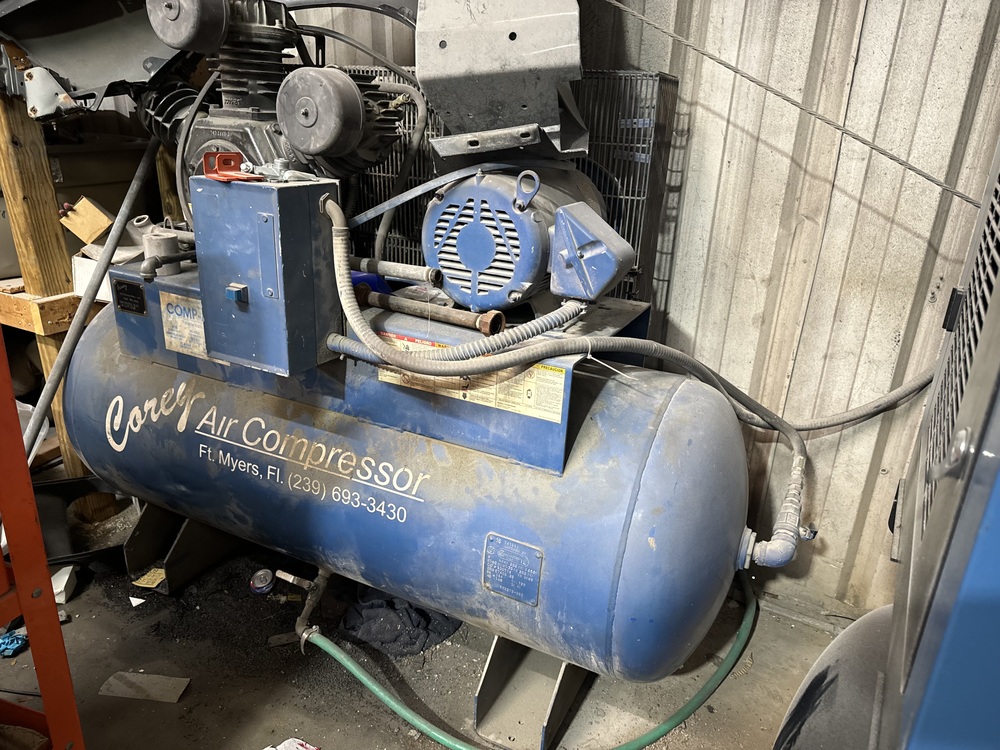
Oil-Flooded Rotary Screw Compressors: The Industrial Default
When most people think of “industrial air,” they mean an oil-flooded rotary screw compressor. And for good reason.
When you stack up total cost of ownership across all the available technologies, the oil-flooded rotary screw is usually the winner for general industrial use. Here’s why:
- Specific power, the kilowatt-hours it takes to produce 100 cubic feet per minute of compressed air, is genuinely good on a modern rotary screw.
- The airends last a long time.
- Maintenance is predictable. Change the filters, change the oil, follow the schedule. Get on a preventive maintenance plan, and you can start predicting failures before they happen.
Over a decade, that combination of efficiency, longevity and predictable service is hard to beat.
The big decision inside this category is whether to go fixed-speed or variable-speed drive (VSD). VSD costs more upfront, no question. But if your facility runs at part load for meaningful chunks of the day, as most do, a VSD unit pays back that premium through lower energy costs. Think of it this way: the energy bill is the largest part of your compressor’s lifetime cost, and a VSD compressor attacks that line item directly. The premium is real, but the lifetime savings usually beat it.
Where the oil-flooded rotary screw doesn’t shine is anywhere air purity is a hard requirement. If your air comes into direct contact with products in the food and beverage, electronics, semiconductor, healthcare industries or any application where oil carryover is unacceptable, you need to look at oil-free technology instead.
And one more critical issue: don’t oversize it. A compressor that’s larger than you need burns more kilowatts every hour it runs, requires more lubricant, uses larger filters and quietly inflates your maintenance costs.
Plus, it may seem counterintuitive, but having too much compressor is as bad as having too little. Here’s why: your compressor could get locked into rapid cycling, turning on and off too frequently. All of that turning on and off can be devastating to your compressor, causing:
- Extra wear and tear on the motor, valves, bearings and other internal parts
- Overheating
- Carryover of moisture and oil
- Wasted energy
- Additional maintenance
- A shorter lifespan
- Water build-up in the oil
Compressors have completely burned out after only six months of rapid cycling. In fact, most manufacturers will tell you that if a 200-HP motor starts and stops more than four times in an hour, it will burn out quickly.
That’s why it’s so important to size a rotary screw compressor correctly. Get the sizing right, and you’ll see cost-efficiency gains almost immediately. Get the sizing wrong, and you’ll pay for it for the next 15 years.
Ask your compressed air professional for an air audit before you select a new machine. It’s the cheapest insurance you can buy.
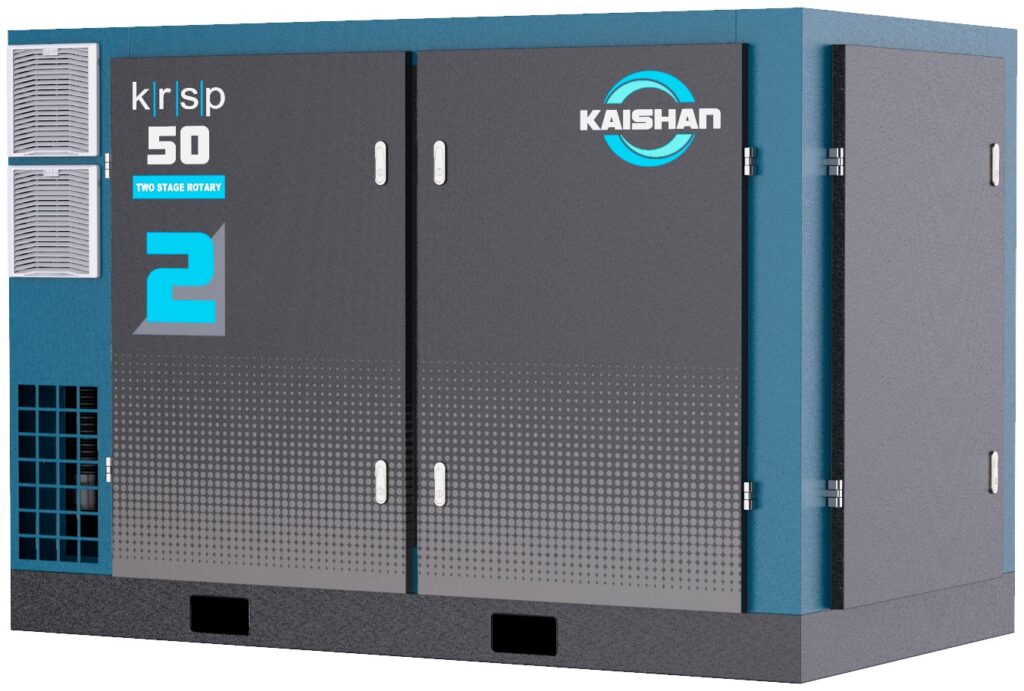
Centrifugal Compressors: Big Money Up Front, Big Savings on the Back End
Centrifugal air compressors are the heavyweights of the compressor world. They’re large machines built for one job: producing a lot of compressed air at a steady pressure, day in and day out, for a very long time.
The dollar-per-CFM math is where the centrifugal wins. A single large centrifugal running a steady baseload will almost always beat the cost of operating multiple rotary screws to produce the same volume. The maintenance is generally lower, too, because there’s only one machine to maintain instead of three or four. If your facility has a heavy, consistent baseload—a large manufacturing operation, a continuous process plant—a centrifugal makes a lot of sense.
The centrifugal loses when your load varies, because centrifugal compressors have limited turndown, typically only about 25% to 30%, controlled by inlet guide vanes. Once demand drops below that range, the machine has to open a blow-off valve to vent compressed air to atmosphere so it doesn’t cross what’s called the surge line. The compressor is still doing all the work of compressing 70% of the air, but you’re dumping it outside instead of using it. Every cubic foot you blow off is energy you paid for and threw away.
The smart play, when your application has varying load, is to keep the centrifugal as your baseload machine and pair it with other compressor technologies to handle the trim. That way the centrifugal stays in its efficient sweet spot and the other machines handle the swings.
Sizing is critical with a centrifugal as well. Get it right, and you’ll see strong long-term cost efficiency. Get it wrong, and you’ll be blowing expensive compressed air into the atmosphere for years. And blowing your cost efficiency right out the window.
![A single large centrifugal, such as Kaishan’s KCOF centrifugal air compressor, [Link to: https://kaishanusa.com/centrifugal-air-compressors/] almost always beats the cost of operating multiple rotary screws to produce the same volume.](https://kaishanusa.com/wp-content/uploads/2026/04/KCOF-1000-Angle-1-1-1.png)
| Type | Reciprocating (light-duty commercial model)* | Rotary Screw | Centrifugal |
|---|---|---|---|
| Universal Issues |
|
||
| Specific Issues |
|
|
|
*Multi-stage, double-acting recips are available with a 100% duty cycle.
**Multi-stage, double-acting recips are energy-efficient, but require expensive, complex installation and are difficult to maintain over time due to parts availability.
Two Variations Worth Knowing
Beyond the three main types, two variations come up often in plant conversations: scroll compressors and oil-free rotary screw compressors. Both have their place. Neither replaces the main three for general industrial use.
Scroll Compressors: Quiet, Clean and Great at Part Load
Scroll compressors are typically oil-free, which means you don’t have to worry about removing oil from your downstream air. That alone cuts your filtration costs. They run quiet and clean, which makes them popular in dental offices, laboratories and small clean-air applications.
The cost per CFM on a scroll is usually higher than a comparable rotary screw, which is why you don’t see them in heavy industrial use.
But they can handle larger applications when they are deployed in duplex and multiplex configurations:
- A duplex is two scroll pumps stacked in one unit.
- A multiplex is three or more.
A controller turns individual scrolls on and off based on demand.
As we’ve mentioned many times in this blog series, the most efficient compressor is one that isn’t running. So, the ability to shut down entire scroll modules during part-load conditions delivers real energy savings.
The catch is when you scale up. Each scroll stage needs its own motor, air end, starter and controls. Stack four of them and you’ve got four of everything, plus a controller balancing hours across the modules. When service time comes, replacing multiple scroll seals or tip seals at once gets expensive fast. The cost advantage that makes scroll compressors attractive at small scale starts to erode as the package gets bigger, and a rotary screw starts looking more attractive by comparison.
Scroll compressors are a great choice for small, clean, low-demand applications. They lose their cost advantage once you need serious volume. In addition, because they are more sensitive to heat, you occasionally have to rebuild the scroll head and replace tip seals, eventually replacing the scroll head.
Oil-Free Rotary Screw Compressors: Insurance You Can Budget For
The oil-free rotary screw is a piece of insurance. You buy it when the application requires it, not when it would be nice to have. Food plants. Pharmaceutical manufacturing. Electronics. Anywhere compressed air comes close to the product.
The cost efficiency here isn’t really about energy savings. It’s about risk avoidance. A single contamination event in those environments can mean a ruined batch, a recall, a line shutdown or worse. Even damage to your brand. The price difference between an oil-injected and an oil-free unit is small compared to the cost of one bad day. That’s why we call oil-free “cheap insurance.” You’re paying a known, budgeted premium to avoid an unknown, potentially catastrophic risk.
One thing to bake into your lifetime cost analysis: oil-free rotary screws have a coating on the rotors that wears off over time. As it wears, internal leakage increases and efficiency drops. At some point—and it’s a “when,” not an “if”—the airends need to be rebuilt or replaced. Plan for it. It’s not a surprise expense if you include it in your lifecycle model from day one.
If your air never touches your product and your local regulations don’t make condensate disposal a headache, oil-injected is the right call and will save you money. If air purity is a hard requirement, oil-free pays for itself the first time it prevents a contamination incident.
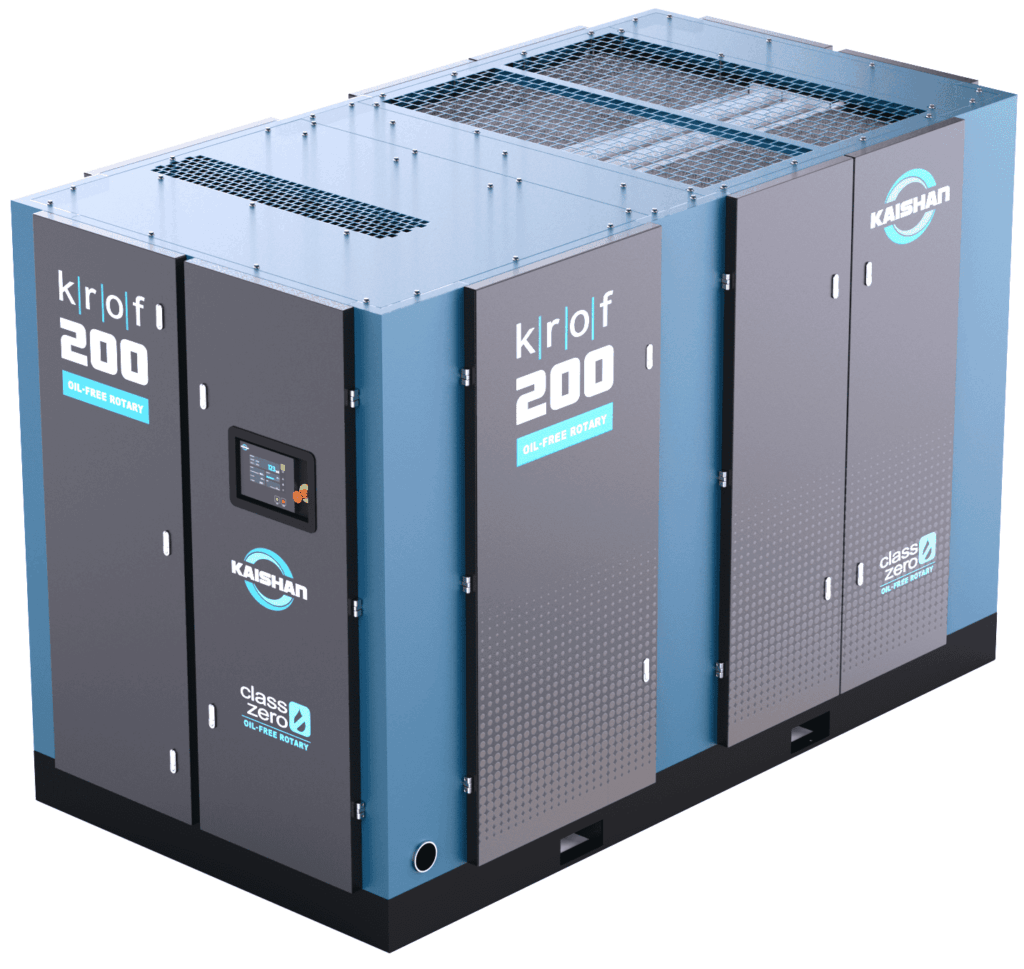
How VSD Fits In
Variable-speed drive is a feature, not a type. You can get VSD on a rotary screw and on some other configurations. The way to think about it: VSD costs more upfront but attacks the biggest line item in your compressor’s lifetime cost, the energy bill.
For facilities with meaningful part-load operation, VSD pays back its premium. For facilities running steady at 80% to 100% load, a high-efficiency fixed-speed unit usually wins on cost. The math is straightforward once you know your actual load profile, which is another good reason to start with an air audit.
Pulling It All Together
To summarize, there’s no single cost-efficiency winner in the compressor market. There’s only the right machine for your air demand, your duty cycle, your power cost and your product. We’d rather help you figure that out than sell you the wrong unit.
When in doubt, get an audit. A local compressed air professional can measure your actual demand, your load profile and your pressure requirements and tell you what fits. The time and cost of an audit is the best investment you can make.
Key Takeaways
- Electricity is the largest line item in a compressor’s lifetime cost, often 70% to 80% of the total.
- Reciprocating compressors win on low duty cycle and low upfront cost. And lose on continuous duty as maintenance costs catch up.
- Oil-flooded rotary screws are the industrial workhorse for good reason: best total cost of ownership for general industrial use.
- Centrifugal compressors win on heavy steady baseload and lose when forced into blow-off at part load.
- VSD adds upfront cost but pays back when your facility spends real time at part load.
- Scroll compressors shine at small clean-air scale; oil-free rotary screws are insurance for hard purity requirements.
- Right-sizing and a pre-purchase air audit are the cheapest efficiency gains available.
Help in Figuring Out What Wins for Your Plant
An audit by a compressed air professional is the best place to start if improving compressed air cost efficiency is your goal.
We’ve seen countless occasions where a good audit assures you that you’re getting the right compressor in the right application. You’ll find a few of them on our case studies page, including Berry Global, Swaggerty’s Farm and Progressive Foundry.
We partner with a nationwide network of independent distributors to make sure you have a local pro to conduct an audit in your plant. It’s the best way to make sure you get the right system, reliable service and quick access to parts when you need them most.
With factory-trained technicians and a deep understanding of industrial applications, they provide on-site help and consultation as needed. These factory-trained air compression experts can service your air compressor system without a problem, helping maximize efficiency and minimize downtime.
So, when you buy through Kaishan, you’re getting more than a product, you’re getting a local partner who cares about your business and wants to see it succeed. Contact us today.
Further Reading
“Finding the Hidden Factors To Do a Cost-Benefit Analysis for a New Air Compressor.” Download this white paper to identify all potential costs and benefits you’ll want to consider in a constantly changing factory environment and an even more unstable global economy.
“Ten Steps to Air Compressor Cost Efficiency.” We offer 10 factors to consider when you’re trying to improve cost efficiency.
“Lowering Compressed Air Costs: Three Key Metrics to Watch.” Several key measurements that help you track the cost efficiency of your operation.
“Compressed Air on a Budget: Four Golden Rules.” Your compressed air system is often one of the largest energy consumers in your facility, making it crucial to look for ways to optimize compressed air system efficiency while keeping costs in check.
Frequently Asked Questions
Listen to the Podcast Version



The Duty Cycle Trap Why Cheap Piston Compressors Cost More
Welcome to The Big Dog Podcast, where industrial air meets unfiltered conversation. I am Jason Reed, along with Lisa Saunders.That is right. Today we are tackling compressed air cost efficiency and how to pick the right compressor without burning money. Jason, where do plant managers go wrong first?
You buy a five thousand dollar piston compressor because the sticker price looks fantastic, and then two years later you are spending fifteen thousand dollars on diesel rentals, valve kits, and an electric bill that looks like a phone number. I, I see this on shop floors all the time.
Fifteen thousand dollars in extra costs just to save a few grand up front? That is, er, that is a massive gap. Why does a piston unit go sideways so fast when you push it?
Because recips are built for intermittent duty. Think a small auto body shop running air tools for maybe thirty minutes at a time, then letting the machine rest. But when that shop grows to three bays and runs eight hours a day, five days a week, you are forcing a machine designed for light duty into continuous service. The rings wear out, the valves wear down, and here is the kicker, as those internal parts wear out, the motor has to pull significantly more kilowatt hours just to hold the exact same system pressure.
So the compressor is working harder and harder, drawing more power, all while delivering less actual usable air. You are basically paying a huge tax on worn out parts every time the motor turns over.
Exactly right. And when you look at the total cost of ownership over ten years, the purchase price is practically a footnote. The Compressed Air and Gas Institute data shows that energy is the single largest cost component over the lifespan of an air compressor, far exceeding the initial purchase price. Electricity usually makes up seventy to eighty percent of what you will ever spend on that machine.
Seventy to eighty percent just in electricity! That totally shifts the focus. So if recips collapse under continuous duty, what is the workhorse for a plant that runs nonstop?
That is where the oil flooded rotary screw comes in. It is the default industrial choice below four hundred horsepower for a reason. Instead of pistons hammering up and down, you have interlocking helical rotors compressing air continuously. They offer incredible specific power, meaning lower kilowatt hours per hundred cubic feet per minute of air produced. Predictable maintenance, high reliability, and a hundred percent duty cycle day in and day out.
So a rotary screw handles the continuous load without burning through energy or eating itself alive. But I know plant managers who get terrified of undersizing, so they go out and buy the biggest rotary screw they can afford. That has to be safer, right?
Sizing Speed and Purity Picking the True Efficiency Winner
That is actually one of the absolute worst things you can do to a rotary screw machine. Oversizing creates a nightmare called rapid cycling. If you put a two hundred horsepower motor in a shop that only needs eighty horsepower of air, that big motor is turning on and off constantly. Most manufacturers will tell you that if a two hundred horsepower motor starts and stops more than four times in an hour, it will overheat and burn out quickly. I have seen oversized units completely toast themselves in six months.Six months! Because it is turning on and off like a light switch instead of settling into a steady run. Plus, doesn't rapid cycling trap moisture in the oil loop because the oil never reaches proper operating temperature?
You nailed it. Water builds up in the oil, destroys the lubrication, and destroys the airend bearings. That is why getting the exact sizing right is everything. And if your air demand fluctuates throughout the day, that is where you look at variable speed drive, or VSD. A fixed speed unit runs at one speed regardless of demand, unloading and burning twenty five to thirty five percent of its full power even when it is not making useful air. A VSD unit slows the motor down or speeds it up to match your exact demand in real time, saving twenty five to thirty five percent on energy costs.
So the extra upfront cost of a VSD package pays itself back in two to three years if your plant runs varying loads. What about facilities with massive, steady air demands, or strict clean air rules like food, pharma, or medical facilities?
For huge, continuous baseloads above four hundred horsepower, centrifugal compressors win on pure cost per cubic foot per minute. But for food processing, semiconductor, or healthcare settings where even a trace of oil carryover ruins a product batch or violates regulations, oil flooded is out. You have to use oil free rotary screw or scroll units. An oil free unit costs more upfront, but it acts as cheap insurance against a million dollar product recall or line shutdown.
Cheap insurance indeed. A ruined batch of pharmaceuticals wipes out any upfront savings on a cheaper machine in five seconds. So before anyone signs a purchase order or guesses their demand, the single best move is booking a professional air audit and reviewing standard CAGI performance sheets.
An audit is the cheapest insurance you will ever buy. It measures your actual demand profile so you do not buy too small or wreck a machine by oversizing. Measure first, pick the right technology for your duty cycle, and stop letting energy bills eat your margins. That is it for today on the Big Dog Podcast. Catch you next time.