
Most companies today find that the energy costs make up the lion’s share of an air compressor’s total cost of ownership. In fact, that figure was placed at 76% in a U.S. Department of Energy study from 2000.
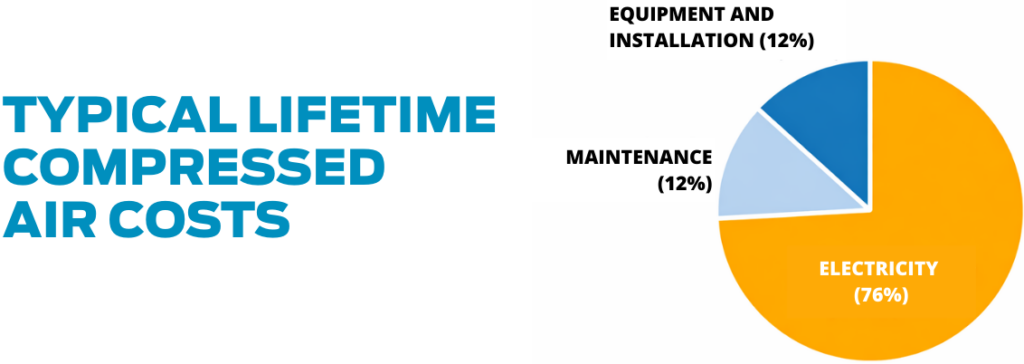
And admittedly, while that study is dated, the orders of magnitude haven’t changed. Energy cost is still the line item that dwarfs everything else on a compressor’s TCO list, including initial cost and maintenance.
In addition, gains in air compressor energy efficiency can have a substantial impact on your bottom line for two reasons:
1. We’ve found that the largest motor in most manufacturing plants is typically on an air compressor.
2. Your compressor is frequently one of the largest (if not the largest) energy consumers in your plant.
As a result, air compressor energy efficiency is worth taking seriously. And the type of compressor you are operating can have a big influence on your energy use.
The Three Main Types, at a Glance
Let’s walk through how the three types of compressors actually compare in terms of energy efficiency.
Reciprocating Compressors
Reciprocating compressors use pistons to compress air, much like an automobile engine.
The inexpensive, lighter-duty commercial units used in many small shops and manufacturing plants have a structural limitation: they can only run 50% of the time (about 30 minutes per hour) to allow them to cool down between cycles. They are the least expensive and least efficient option (except in intermittent uses).
To deliver the same usable air, you typically need a recip with a higher horsepower rating than you would for other compressor types.
However, they can be very efficient when sized correctly and are well-suited to intermittent loads.
We should point out, however, that multi-stage, double-acting recips are available with a 100% duty cycle. They can be the most energy-efficient choice, but they are only appropriate in specialized applications.
Rotary Screw Compressors
Rotary screw compressors are a simple, time-tested design that enables impressive efficiency. They can handle a 100% duty cycle, deliver a continuous flow of air and operate close to full load—which is where they’re most efficient. In fact, the best practice is to set up your compressed air system so rotary screws run as close to full load as possible.
For most industrial applications, the rotary screw is the most energy-efficient choice, delivering more compressed air per horsepower than the alternatives.
Centrifugal Compressors
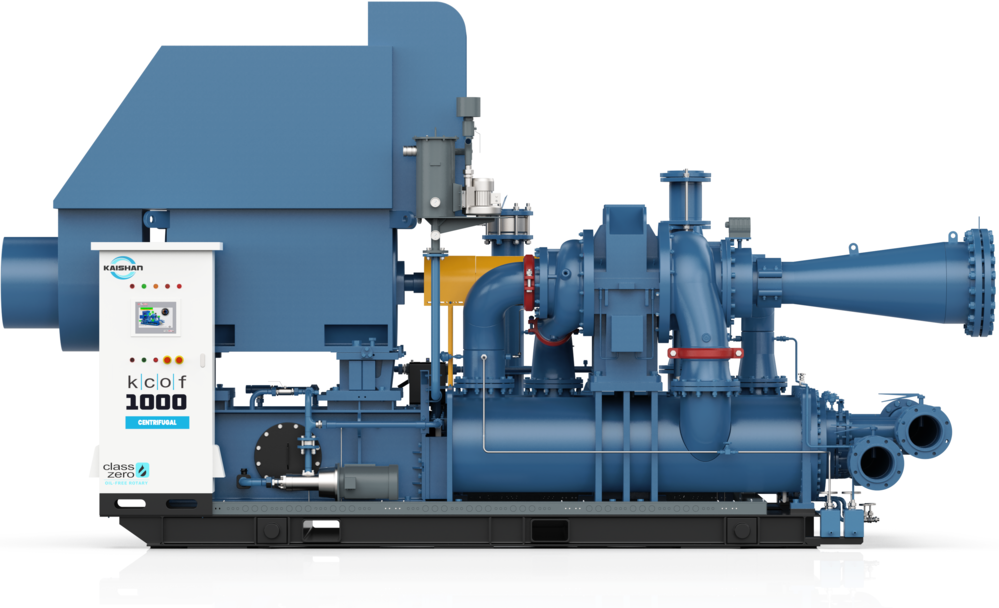
For facilities with higher volumes and steady demand, centrifugal compressors are an energy-efficient option. They produce a lot of air from a small footprint, but they’re only cost-effective above roughly 400 HP. A two-stage, oil-flooded rotary screw compressor tends to be a more efficient choice, however, between 400 HP and 600 HP.
Centrifugals lose efficiency in part-load or unload conditions when they have to release air to the atmosphere.
Compressed Air Energy Efficiency: Which Type of Compressor Wins?
| Type | Reciprocating (light-duty commercial model)* | Rotary Screw | Centrifugal |
|---|---|---|---|
| Universal Issues |
Issues Across All Types Match the compressor to the application Lifetime cost is more important than initial cost Controls and system configuration are important Maintenance is non-negotiable |
||
| Specific Issues |
|
|
|
*Multi-stage, double-acting recips are available with a 100% duty cycle.
**Multi-stage, double-acting recips can be the most energy-efficient choice, but they are only appropriate in specialized applications.
That’s the top-line summary. But there’s more to the picture.
Variations Worth Considering
A few specialty designs deserve a mention before you commit to a type.
- Scroll compressors sit at the low end of the field—the lowest of any common design—but they perform well in small applications such as dental offices, labs and light workshops.
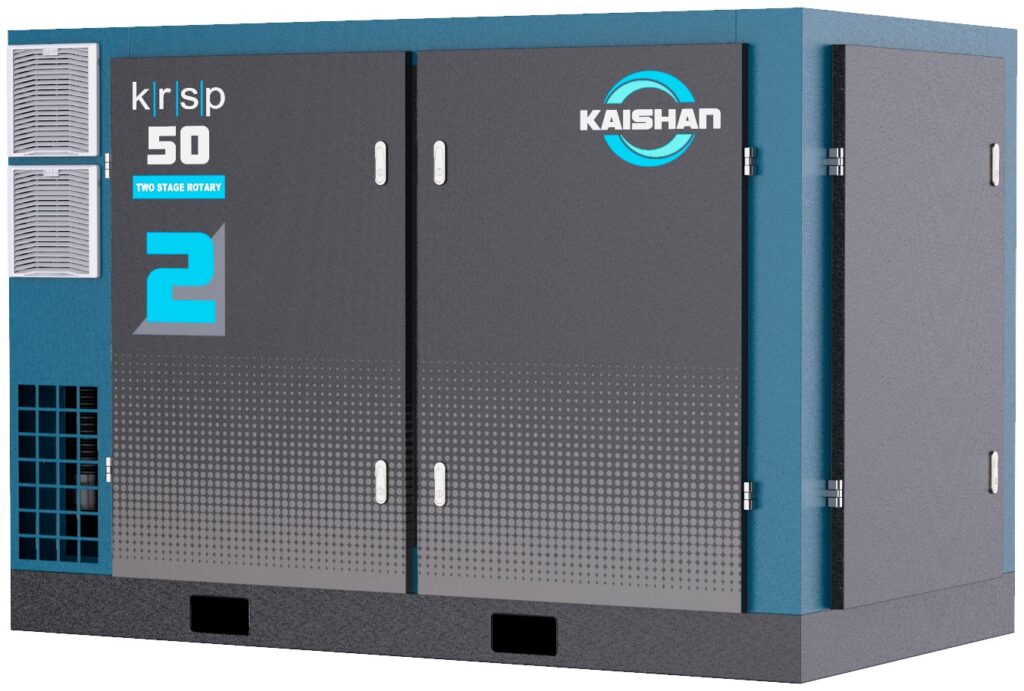
- Two-stage rotary screw compressors divide the compression cycle into two steps, extracting more work from each kilowatt-hour. By splitting compression into two stages, a two-stage model such as Kaishan’s KRSP2 premium rotary screw air compressor generates up to 15% to 20% more flow in the same size air compressor—a payback that recoups the price difference quickly. While most manufacturers only produce two-stage units at 125 HP and above, Kaishan USA offers two-stage compressors as low as 30 HP, providing a new, high-efficiency option to smaller and midsize plants.
- Oil-free rotary screw air compressors are required in industries such as food and beverage, semiconductor and healthcare where contamination is unacceptable. They are less energy efficient than oil-flooded rotary screws: without oil sealing the rotors, oil-free compressors generate more heat and seal the airend less efficiently, leading to lower energy performance. Kaishan’s KROF two-stage, oil-free, rotary screw air compressor addresses that tradeoff with engineered sealing and cooling.
- Variable-speed drive (VSD) air compressors adjust motor speed to match actual air demand in real time. The Compressed Air and Gas Institute (CAGI) reports that VSDs can reduce energy use by about a third in the right application. In a world where electricity is one of the largest lifecycle costs on a compressed air system, that’s real money. Beyond energy, VSDs add to reliability by allowing soft starts, qualifying for utility rebates, offering better control of compressed air systems and addressing rapid cycling.
- Industrial-grade reciprocating compressors operate at a 100% duty cycle, but they are very expensive—typically reserved for specialty industrial applications.
What Matters More Than the Type
While your choice of compressor type matters, it’s rarely the most important decision you’ll make. Several other factors are even more relevant to energy-efficient compressor operation:
- Match the compressor to the application. It’s all about the work to be done. Steady, high air volumes do not pair with a recip. If you have high variation, look at a rotary screw—and probably a VSD.
- Initial cost is not the lifetime cost. A compressor’s sticker price is usually less than 20% of its total cost of ownership, as indicated by the 2000 DOE study mentioned above, which put purchase and installation at 12%, electricity at 76% and maintenance at the remaining 12%. Maintenance managers who request an energy audit before they request a quote typically come out ahead. In our experience, what you learn from an audit is eye-opening.
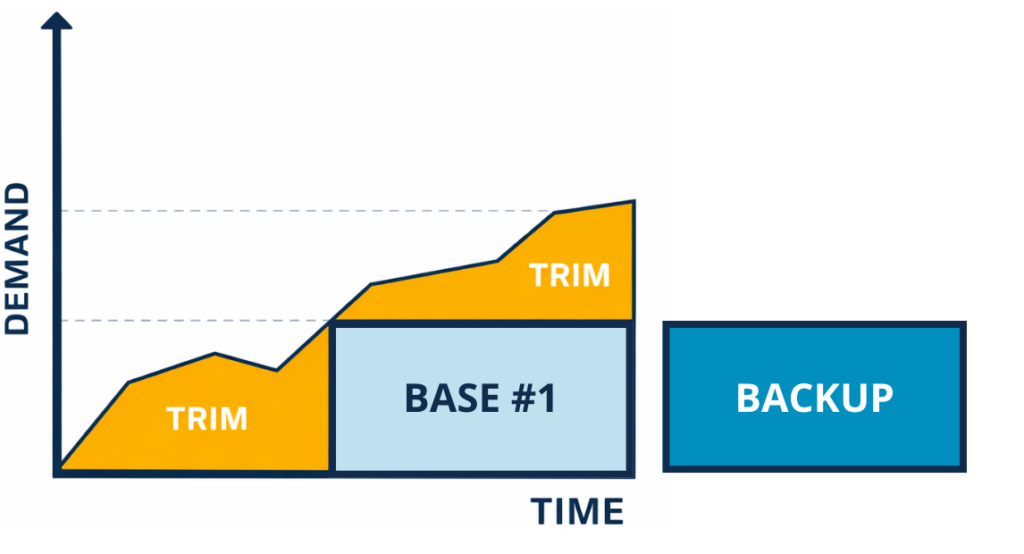
- Controls and system configuration can save more energy than a change in type. The most energy-efficient compressor is often the one you have turned off. Pairing a base-load machine with a trim compressor, governed by a master controller, can hold the system within a tight band such as +/- 2 PSIG, according to Compressed Air Best Practices, avoiding the inefficiency of cascading multiple compressors at staggered pressure levels. Many compressed air users have turned to system master controls to network air compressors (even across manufacturers) and operate them in a preprogrammed sequence. Adding pressure-flow control further buffers the compressors from demand swings by holding pressure stable.
- Maintenance is non-negotiable. Following a proactive maintenance program is essential if your goal is to maximize energy efficiency. Read our white paper for more information on migrating to a predictive maintenance model. You will, however, want to observe preventive maintenance requirements where manufacturers’ warranties apply.
And always be on the lookout for leaks. They’re one of the most common sources of wasted energy. Similarly, stamp out artificial demand, such as unnecessary uses. Or setting the header pressure higher than your equipment actually needs. Reducing header pressure is one of the fastest ways to lower your energy bill.
The Bottom Line
There is no single “winning” compressor type. Recips win on initial purchase price and tolerate harsh intake conditions; rotary screws win on efficiency and uptime for most industrial workloads; centrifugals win at very high volumes with steady demand. Within each family, two-stage designs and VSD controls create real, measurable efficiency gains.
Energy efficiency is one of the most concrete levers a plant has for sustainability—and sustainability is one of our founding principles. The biggest efficiency gains at most plants come from pairing the right machine with the right controls, the right operating pressure and a disciplined maintenance program.
The most energy-efficient compressor isn’t simply the newest model or the one with the highest efficiency rating. It’s the compressor that’s properly matched to the application, controlled correctly and maintained throughout its life. Choosing the right machine is important. But choosing the right system is what delivers lasting savings.
The best way to find that combination is to work with a trusted compressed air professional before you specify the next compressor.
Key Takeaways
- Type matters, but match beats best. The light-duty reciprocating compressors used in many small shops and plants are the least expensive and least efficient option (except in intermittent uses), but larger, more efficient double-acting recips can be the most energy-efficient choice in niche applications. Centrifugals win at high volumes with steady demand (above 400 HP), but lose efficiency in part-load or unload applications when they have to release air to the atmosphere. For most industrial applications, however, the rotary screw is the go-to alternative.
- Two-stage rotary screws can deliver 15–20% more flow in the same size frame. Splitting compression into two steps extracts more work from each kilowatt-hour, and the resulting payback often recoups the price difference quickly. Two-stage is now available as low as 30 HP—historically, the smallest units only ran two-stage starting at much higher horsepower.
- VSD compressors can cut energy use by about 33%. Variable-speed drives match motor speed to real-time demand rather than running at full tilt and unloading. They also enable soft starts, reduce rapid-cycling wear and often qualify for utility rebates—important because electricity drives most of a compressor’s lifetime cost.
- Electricity is approximately 76% of lifetime cost—far more than purchase price. A 2000 U.S. Department of Energy study found that purchase and installation accounted for just 12% of the lifetime cost, with electricity at 76% and maintenance at the remaining 12%. The cheapest quote is rarely the cheapest compressor; request an audit before you specify.
- Controls and maintenance often save more energy than the type itself. A base-load/trim configuration run by a master controller (often paired with pressure-flow control) is usually the biggest efficiency lever—keeping pressure as tight as +/- 2 PSIG beats cascading compressors at staggered levels. Leak repair, cutting artificial demand and reducing header pressure add further savings that no compressor spec can match.
A Partner for Energy-Efficiency
Kaishan USA works with a nationwide network of independent distributors, who can provide on-site help and consultation as needed.
We work with independent, local distributors because it’s the best way to make sure you get the right system, reliable service and quick access to parts when you need them most.
With factory-trained technicians and a deep understanding of industrial applications, they help maximize efficiency and minimize downtime.
So, when you buy through Kaishan, you’re getting more than a product—you’re getting a local partner who cares about your business and wants to see it succeed. Contact us today.
Further Reading
“A Beginner’s Guide to Reading Rotary Screw Compressor Performance Curves.” Explanation of the new standards for making apples-to-apples comparisons of the different types of compressors.
“Air Compressor Predictive Maintenance: A Practical Guide for Plant and Maintenance Managers.” How to implement predictive maintenance while still observing manufacturers’ preventive maintenance requirements.
Frequently Asked Questions
Listen to the Podcast Version



The Lifetime TCO Reality and the Big Three Compressor Designs
Welcome back to The Big Dog Podcast, powered by Kaishan USA, where industrial air meets unfiltered, straight talking conversation. I am Jason Reed.And I am Lisa Saunders. Today we are breaking down compressed air energy efficiency, the tech, and the real challenges plant managers face on the shop floor every day.
You know, if you walked onto almost any shop floor right now and pointed at the biggest, most aggressive electric motor in the entire facility, nine times out of ten, er, it is not on a massive saw or a giant conveyor. It is sitting right inside the main air compressor.
Right inside the air compressor! And people, I mean, people look at the purchase tag on those machines and think that is where the real money is. But a classic U.S. Department of Energy study showed equipment and installation is only twelve percent of the total lifetime cost. Twelve percent!
Yeah, twelve percent. And maintenance is another twelve percent. The other seventy six percent? Pure electricity. That is why in facilities like food processing, compressed air can easily swallow fifteen to thirty percent of the entire plant operating bill.
Seventy six percent on power alone. So when you are picking a compressor, you are not buying a shop tool. You are basically signing a long term power contract.
Exactly, exactly. And, uh, that brings us to how these different designs actually chew through that power. Take piston recips, reciprocating compressors. The standard commercial models most folks start with, they have a major physical wall. A fifty percent duty cycle limit.
Wait, fifty percent? So out of an hour, it can only run...
Thirty minutes. Thirty minutes on, thirty minutes off, just to keep from overheating the mechanics. So to get the actual usable air your plant needs, you end up having to buy a much bigger horsepower rating than you would with other types.
Ah, so you inflate the horsepower just to make up for the cool down breaks. Whereas a rotary screw air compressor, I mean, that is designed for a hundred percent duty cycle, right?
A hundred percent continuous flow. The interlocking helical rotors just trap ambient air, shrink the chamber volume, and pump it out. And rotary screws deliver their peak energy efficiency when they are running right up close to full load. For most industrial setups under four hundred horsepower, the rotary screw is pretty much the undisputed champ.
Under four hundred horsepower, got it. But what happens once a facility pushes past four hundred horsepower? That is where centrifugals enter the picture, right?
Right. Centrifugals use high speed rotating impellers to move massive volume from a relatively small footprint. They can be super efficient above four hundred horsepower, but, uh, there is a catch. The part load trap.
The part load trap. Meaning when plant demand drops below full throttle?
When demand drops, a centrifugal cannot just turn down easily. To prevent surging, it has to vent excess compressed air right out to the atmosphere. You are literally blowing manufactured pressure into thin air while the electric meter keeps spinning.
Blowing money straight into the air! That is a massive penalty if your air demand swings around during a shift.
Huge penalty. In fact, between four hundred and six hundred horsepower, a two stage oil flooded rotary screw often beats a centrifugal on total cost of ownership simply because it handles those demand swings without dumping air.
Two Stage Savings Oil Free Penalties and Matching Demand Profiles
Well, let us talk about those two stage rotary screws for a second, because that is where the math gets really interesting. By splitting the compression into two separate steps, you are extracting way more work per kilowatt hour, right?Yeah, you are looking at fifteen to twenty percent more air flow for the exact same power draw. Historically, manufacturers only built two stage units starting at a hundred and twenty five horsepower and up. But companies like Kaishan offer two stage models down to thirty horsepower now, so even midsize shops can grab that efficiency boost.
Fifteen to twenty percent more CFM at thirty horsepower! That pays back the price difference super fast when electricity is seventy six percent of your total cost. But, okay, Jason, what about plants that cannot risk a single drop of oil in their air stream? Like pharmaceutical or electronics or food packaging?
Ah, the oil free tax. See, in an oil flooded rotary screw, the oil seals the tight spaces between the rotors and pulls out compression heat. In an oil free machine, you lose that liquid seal and cooling medium. The rotors run hotter, air leaks back past the rotors, and the thermal efficiency drops.
So oil free actually costs more to run because the physics of sealing without oil are just tougher?
It is a physical energy penalty, plain and simple. Modern units like Kaishan's two stage oil free design have to use specialized intercooling and rotor coating engineering just to claw back those lost kilowatts.
Man. That is why you really have to know your exact air quality requirement before making assumptions. Now, what about plants with fluctuating demand? You mentioned variable speed drives earlier.
Yeah, VSDs are huge. According to data from CAGI, the Compressed Air and Gas Institute, adding a variable speed drive can slash energy consumption by about thirty three percent in the right setup. CAGI is really the unbiased authority on compressed air performance, and their testing shows matching motor speed directly to real time air demand stops the compressor from constantly running at full tilt and then idling under load.
Thirty three percent reduction! That is a third of your power bill gone. Plus, you get soft starts and avoid rapid cycling wear on the equipment.
Right. But remember, the machine itself is only one part of the puzzle. You can buy the sleekest VSD unit on the market, but if your controls are misconfigured, or your plant header pressure is set ten PSIG higher than necessary, you are throwing money away. Pairing a base load machine with a dedicated trim unit under a master controller can keep system pressure locked within plus or minus two PSIG.
Plus or minus two PSIG instead of letting pressure bounce all over the place and cascading multiple machines on and off. And, er, fixing air leaks! I feel like people always forget how much energy is wasted through small air leaks in the piping.
Leaks are the silent energy killer on the shop floor. That is why requesting a full energy assessment and audit before you ever order new iron is usually the smartest move a plant manager can make.
Because at the end of the day, matching the system setup to your real world demand profile matters way more than just chasing a single efficiency number on a spec sheet. That seventy six percent energy cost means system design wins every single time.
Every single time, Lisa. Alright, that is going to wrap it up for us today on the Big Dog Podcast. Thanks for tuning in, everyone.
Catch you all next time!